
Deck vs Patio for Georgia Homes: Which Is the Better Investment in 2026?
Deck vs patio for Georgia homes: compare cost, upkeep, resale and ROI, plus Coweta and Fayette County permit tips, to choose the better 2026 outdoor build.

By Jason Howard · Owner & Lead Remodeler
Deck vs patio is the first real decision in any backyard project, and the two are not interchangeable. One is a raised, framed platform; the other is a hard surface laid straight on the ground.
Most people arrive here from one of three places. Some have a back door sitting three feet above the yard and no idea what that costs to bridge. Some have a flat lot and are choosing purely on price and upkeep. And some are weighing which one a buyer will pay for in a few years.
Here is what each one is. A deck is a platform built on posts, beams and footings, so it can meet a door at any height. A patio is poured concrete or laid pavers, sitting on compacted ground, which means it needs ground that is already close to level.
By the end you will know the core difference, what each asks in upkeep, what they cost and return at resale, what the county requires, and which one fits your yard.
I am Jason Howard. I run QWR Remodeling and Handyman Services out of Newnan, a family business since 2000, and decks and patios are steady work here from the first warm weekend through the fall.
Key takeaways
- A deck is a raised, supported structure; a patio is an at-grade surface. Your yard’s slope usually decides which one fits.
- Patios on flat ground tend to cost less upfront. Decks cost more because of framing and footings, with composite at the top.
- When you add a deck, you get back roughly 89 to 95 percent of its cost at resale nationally, among the best of any home project.
- A poured concrete or paver patio asks for the least year-to-year upkeep. A wood deck needs regular sealing and staining.
- Raised decks are permit-and-inspection work in Coweta County and Fayette County. Hire a licensed, insured builder and get a written quote.
Deck vs patio in Georgia: the core difference
A deck is a raised platform on posts, beams and footings. A patio is a hard surface poured or laid straight on the ground, and your yard’s slope usually picks for you.
A deck is a raised platform built on posts, beams, and footings. A patio is a hard surface poured or laid directly on the ground. That one difference drives nearly every other decision, from price to upkeep to where the space can go.
The deciding factor is your yard. If your back door opens several feet above the ground, or your lot drops off behind the house, a deck bridges that height. It gives you a level floor where a patio cannot easily go. If your yard is flat and close to the back door, a patio sits right where you want it with no structure to build. Many south Atlanta metro homes have a mix, so a deck off the kitchen with steps down to a patio by the fire pit is a common, practical layout.
This is also where use comes in. A deck reads as part of the house, raised and connected to the back door, good for a grill and a dining table. A patio feels grounded in the yard, good for a fire pit, a hot tub, or a paver lounge area under a cedar pergola for shade.
| Deck | Patio | |
|---|---|---|
| What it is | Raised, framed structure on footings | At-grade concrete or paver surface |
| Best yard | Sloped lot or back door above grade | Flat ground near the back door |
| Upfront cost | Middle (wood) to high (composite) | Lower (concrete), mid (premium pavers) |
| Yearly upkeep | Wood needs sealing and staining; composite wipes clean | Sweep, rinse, occasional pressure washing |
| Resale return | About 95% wood, 89% composite, national (Zonda 2025) | Adds usable, finished square footage |
| Permit | Yes, structural, with inspection | Often lighter; varies by county |
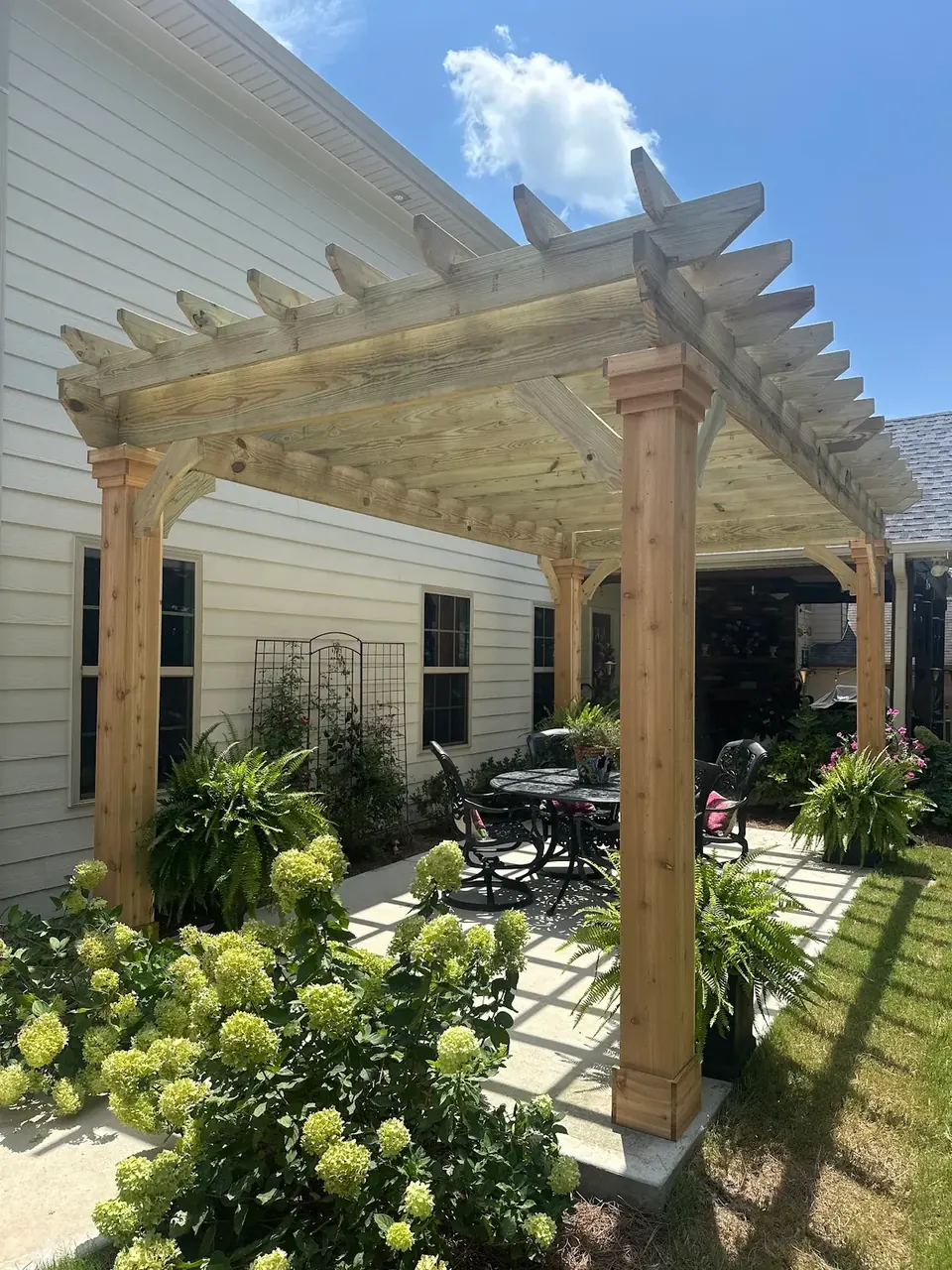
Upkeep and longevity: what each one asks of you
A patio asks for the least ongoing work, and a wood deck asks for the most. That trade-off matters as much as the price tag, because you live with it every year.
A poured concrete or paver patio mostly needs to stay clean. An occasional sweep, a rinse, and a periodic pressure washing keep it looking new, and pavers have the bonus that a single cracked one can be lifted and swapped. Use a light touch with any pressure washer, since too much force can chip pavers or etch concrete, and when in doubt hire a pro.
A wood deck is the higher-maintenance option. Pressure-treated wood needs cleaning and a fresh coat of sealer or stain every couple of years to hold its color and stay solid. Composite decking changes that math. The boards cost more upfront, but they never need staining and wipe down with soap and water. That is why a lot of homeowners now compare composite deck vs concrete patio cost as a long-term number, not just a day-one price. A well-built deck lasts decades when it is maintained, and composite boards often carry long manufacturer warranties.
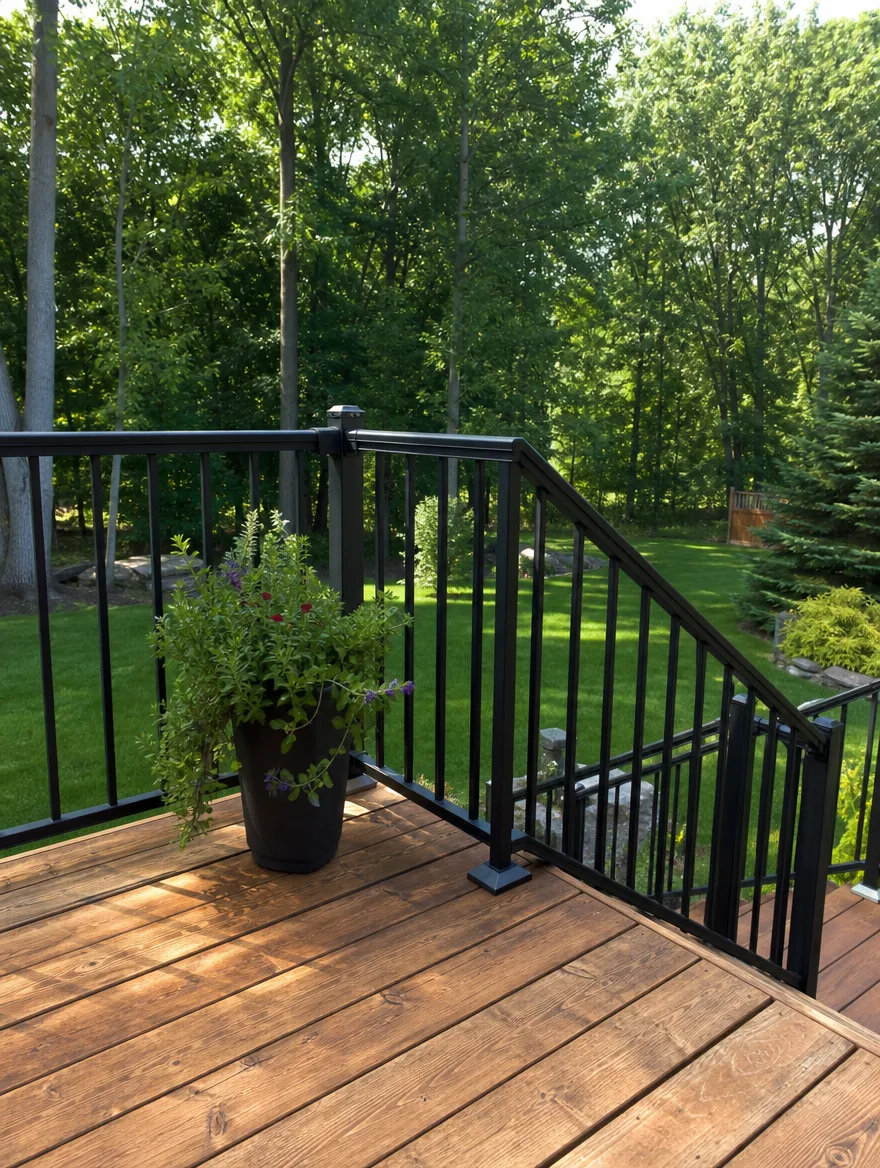
Cost and return on investment, honestly
Here is the honest version: a patio is usually the cheaper build, a deck costs more, and both return strong value at resale. For a deck vs patio cost comparison on a flat lot, a poured concrete patio sits at the low end. A wood deck sits in the middle, and a composite deck at the high end once you add framing, footings, railings, and the board material. Treat those as general ranges that shift with size, access, and your yard, never as a quote.
Resale is where outdoor projects shine. In the 2025 Cost vs. Value Report by Zonda, exterior projects again ranked near the top for how much of the cost owners get back when they sell. In higher sale prices, buyers paid about 95 percent of what a wood deck cost and about 89 percent of what a composite deck cost. Those are national averages, not Georgia-specific numbers, but they tell a clear story: a deck or patio is one of the few upgrades you enjoy now and largely get back later. So is a deck or patio better for resale? Both help, and a finished, well-fitted space matters more than the material you pick.
Because the price varies so much by project, the only number that means anything is one written for your home. We give a free, itemized estimate so you see real figures, not a national average. For a larger outdoor-living build, financing can spread the cost out; we partner with Hearth, and checking your financing options does not affect your credit score. Whatever you choose, ask for a written, itemized quote before any work starts.
Permits, footings, drainage, and county rules for south-metro homes
A raised deck is a structural project that needs a permit and inspection, while a simple ground-level patio usually involves less. That difference is not red tape; it is the part that keeps your family safe and your house insurable.
A deck stands on footings, posts and beams holding up people, furniture and a grill, so the build has to meet code. Coweta County reviews and inspects this work through its Building Permits and Inspections division, and Fayette County does the same through its Building Safety department. A licensed builder pulls the permit, builds to the current code, and schedules the inspections for you.
Patios bring their own planning. The ground has to be graded so water runs away from your house, not toward the foundation, and the base has to be compacted so pavers do not settle and shift. Slope is the quiet deciding factor again: a steep yard can make a patio expensive to level, at which point a deck is often the smarter and safer build. This is planning and professional work, not a weekend project, especially anything raised or at height.
Which should you build: a simple decision guide
Start with your yard, then layer in budget, use, and resale goals. Here is how the choice usually shakes out.
- By slope. Flat yard near the back door: lean patio. Back door above grade or a sloped lot: lean deck. A mix of both is a great use of a larger yard.
- By budget. Lowest upfront cost on flat ground: concrete patio. Middle: wood deck. Highest, with the lowest future upkeep: composite deck or a paver patio with premium stone.
- By use. Grilling and dining off the kitchen: deck. Fire pit, hot tub, or a shaded lounge: patio, often with a pergola. Want bug-free, all-day sitting and willing to pay more? Compare a screened porch vs deck in Georgia before you decide, since the porch adds a roof and screens for a higher price but more usable hours.
- By resale. Both return well. Build the one that fits the house and finish it properly; a half-done deck or a settling patio hurts value more than the material choice ever will.
QWR Remodeling and Handyman Services is family-run, licensed and insured, based in Newnan. We have over 20 years building decks, patios and outdoor living spaces across Coweta County, Fayette County, Peachtree City, Fayetteville, and the south Atlanta metro. One crew designs and builds it, so the project stays on schedule and the finish stays consistent.
FAQ
How long does a deck or patio take to build?
A straightforward patio on flat, prepared ground is usually a few days, plus curing time before you put furniture on concrete. A raised deck runs one to two weeks, and the calendar is set by the footing inspection more than by the framing. Rain moves both, because neither concrete nor footings go in wet ground.
Which is cheaper, a composite deck or a concrete patio?
On a flat yard, a poured concrete patio is usually the lower upfront cost, while a composite deck sits at the higher end because of framing, footings, and the board material. These are general ranges, not quotes, so get a written, itemized estimate for your home.
What is the best outdoor living addition for a Newnan, GA home?
It depends on your yard and how you want to use it. A flat backyard near the kitchen often points to a patio, while a back door several feet above the ground points to a deck. A pergola is a popular add-on for shade over a patio.
Is a screened porch better than a deck in Georgia?
A screened porch costs more than an open deck because it adds a roof, screens, and often a finished floor, but it gives bug-free, all-day use. If you mostly want open space to grill and gather, a deck or patio does the job for less.
Do I need a permit to build a deck or patio in Coweta or Fayette County?
A raised deck almost always needs a permit and inspection, since it is a supported structure. A ground-level patio often needs less, but rules vary by county and subdivision, and a licensed builder confirms and pulls the permits as part of the job.
How we build a deck or a patio here
We price both when the yard allows both. That comparison is the whole question, and you should see it in real numbers rather than ranges.
- We measure the drop from your back door to the ground first. That single number decides most of this, and it is free to find out.
- We tell you plainly which one your lot wants, including when the cheaper answer is the right one.
- We pull the permit and book the footing inspection in Coweta or Fayette County, in our name.
- We build the whole outdoor space with one crew, so framing, concrete, a screened enclosure and any electrical stay on one schedule.
Licensed and insured, family-run since 2000, with financing through Hearth for the larger builds.
Ready to plan your deck or patio?
If you are weighing a deck, a patio, or a full outdoor living space anywhere in Newnan or the south Atlanta metro, let’s talk it through. Book an appointment for a free, itemized estimate, or call (770) 983-8856. Ask about Hearth financing for larger outdoor-living builds.
Written by
Jason HowardJason Howard is the owner of QWR Remodeling & Handyman Service in Newnan, GA. He has spent over 20 years remodeling homes across Coweta and Fayette County and personally meets with homeowners to scope custom showers, bathroom remodels and full renovations.
